About the Project
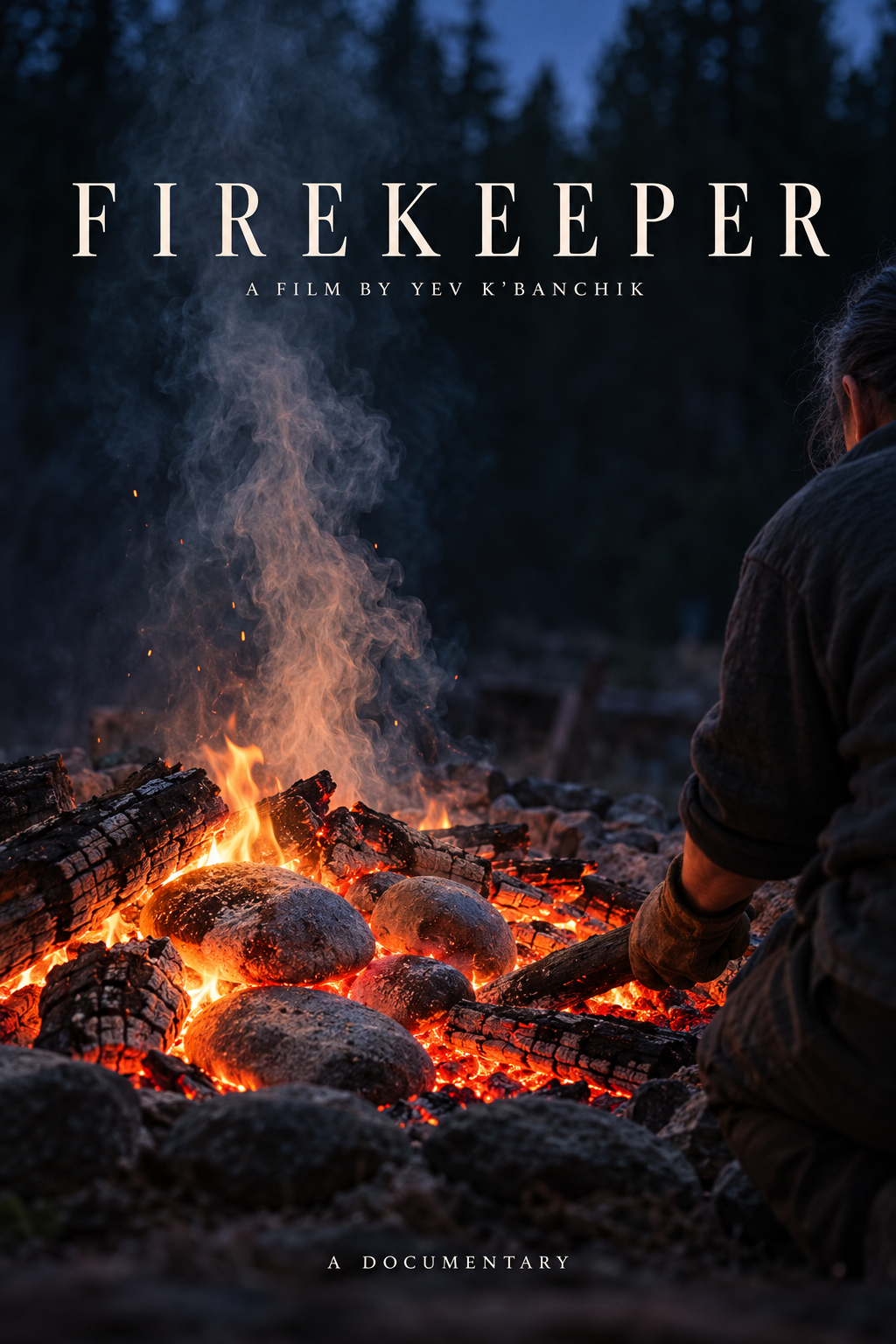
Firekeeper is an observational documentary exploring the living traditions, cultural memory, and resilience of the Haudenosaunee people through the quiet work of a Firekeeper—a person responsible for tending the sacred fire during a traditional sweat ceremony.
The film follows the preparation and progression of the ceremony, but the audience never enters the sweat lodge. Instead, the camera remains outside with the Firekeeper as he gathers rocks, prepares the fire, heats the stones, and tends the flames while others participate in the ceremony. His work unfolds largely in silence, creating a contemplative visual narrative about responsibility, patience, and the often-unseen acts that sustain cultural traditions.
Interwoven with this observational journey are conversations with members of the Haudenosaunee community, including Mohawk Bear Clan Mother Louise McDonald Herne, cultural educator Joshua Sargent, and David Fadden, grandson of Ray Fadden (Tehanetorens), an influential Mohawk educator who dedicated his life to preserving and teaching Haudenosaunee traditions. Their stories explore the Great Law of Peace, the origins of the Haudenosaunee Confederacy, the relationship between Indigenous governance and American democracy, and the transmission of ancestral knowledge across generations.
The film also grows from a personal connection. As a Ukrainian-born filmmaker, I come from a culture that has endured centuries of imperial domination and attempts to suppress its language and identity. I grew up in a Russian-speaking family where Ukrainian was dismissed as a language of peasants, even by those whose own roots were Ukrainian. Today, as Ukraine struggles to defend its independence and cultural identity, I find myself confronting questions of decolonization and trying to recover parts of my own cultural heritage that previous generations were encouraged to abandon.
Although our histories and experiences are different, I recognize a shared struggle to preserve language, memory, and cultural identity in the face of assimilation. This connection draws me to the Haudenosaunee community, not simply to document its history, but to understand how traditions remain alive through the people who continue to practice and pass them on.
At its heart, Firekeeper is a film about continuity. While the conversations explore centuries of history, cultural survival, and the meaning of identity, the Firekeeper quietly tends the flames. His work becomes the film's central image—a reminder that traditions do not survive on their own. They endure because someone continues to care for them.
Reconciliation in Finland
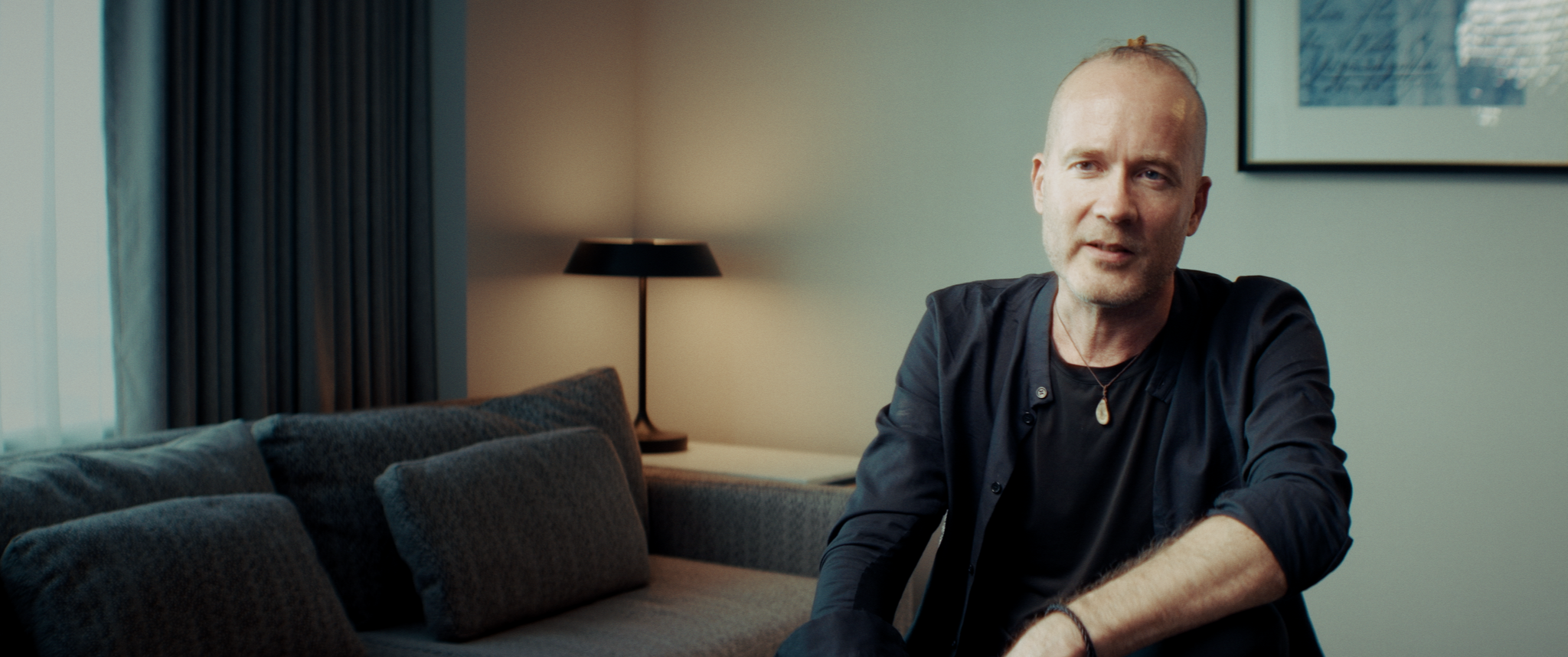
Antti Pentikäinen.
Finnish peace mediator and reconciliation practitioner.
Antti Pentikäinen brings the film into the difficult space between public acknowledgment and lived repair. After years of mediation in conflict zones, he turned toward the question of how people heal from violence and inherited harm. His own family history gives that inquiry an intimate dimension: recalling his grandfather’s wartime service and his father’s memory of an absent parent, he recognizes a pattern of sacrifice that he had repeated in his own work. Reconciliation becomes a responsibility he must also examine within himself.
In the interview, Antti recalls being asked by Finland’s prime minister in 2016 to investigate the country’s unresolved relationship with its Indigenous Sámi people. He describes recommending a truth and reconciliation process that would connect fact-finding with community mediation and lasting mental health support. His initial confidence gives way to a harder understanding: releasing resources does not automatically repair relationships, and a process designed from outside cannot determine a community’s path to healing.
The Finnish Government appointed the Truth and Reconciliation Commission Concerning the Sámi People in 2021, following preparation with the Sámi Parliament and the Skolt Sámi Siida Council. The commission submitted its final report to those bodies and the Government on 4 December 2025. This public process gives the storyline its institutional context; Antti’s testimony directs attention to the slower work of rebuilding trust and the question of what follows acknowledgment.
At the heart of his account are small gatherings where Sámi participants can speak about what they remember of their grandparents’ spiritual lives: prayers, healing herbs, water, and relationships with ancestors. He describes how suppression and surveillance left mistrust that made even these conversations difficult. The possibility of speaking freely must grow at the community’s own pace, with consent. Elders and younger generations need room to reconnect without an outside authority deciding what their traditions should become.
Through Antti, the film asks how state responsibility can meet community authority. His reflections on “spiritual injury” concern ruptures in how people understand themselves and relate to others, the land, and the world around them. They bring the Sámi storyline into conversation with Joshua’s account of healing and David’s account of cultural transmission, while preserving the differences between their histories. The return to the Firekeeper grounds these questions in the present: patient work carried out so others can gather.